

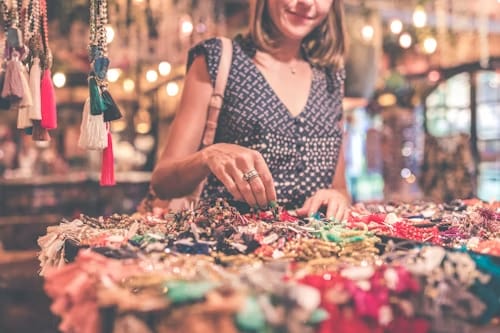
In the current fashion industry, getting reliable partners such as costume jewelry manufacturers is important for B2B brands to establish consistency, quality, and scalability. Suppliers can become valuable strategic partners in assisting brands in launching new collections, managing production costs, and developing brand identity. On the other hand, poor choices in suppliers can create quality issues, delayed deliveries, and a loss of market opportunities. Potential sellers in the jewelry businesses, the distributors and wholesalers Wholesale Costume Jewelry Suppliers is not just about price comparisons. It is about production capacity, design and quality innovation, and ethical production. This article is about the factors B2B businesses must consider in order to establish long term relations with costume jewelry manufacturers.
Understanding the Role of Costume Jewelry Manufacturers in the B2B Supply Chain
Costume jewelry manufacturers are main actors in the developing accessories market. They transform design ideas into real products in a market that values aesthetics, durability, and affordability. For B2B buyers, these manufacturers provide scalable solutions to long term and seasonal business goals.
Along with developing a brand’s rotation, a dependable manufacturer also makes contributions that help shape a brand’s identity. By helping jewelry distributors and private-label brands develop a prototype, identify materials, and adjust to trends, they help keep them on top of fashion trends.
When picking a supplier, how well a supplier fits in with your business needs to be highly considered. While some manufacturers tailor their selling to mass retailers with higher volumes, some cater to boutique and online brand clients. The best partnerships are those that can achieve a mutual vision of quality, innovation, and sustainability.
In many instances, earrings wholesale suppliers and other accessory producers collaborate with B2B clients to ensure a strong market fit by developing customized product lines for certain demographics or geographies.
Evaluating Manufacturing Capabilities and Production Flexibility
When considering how to fulfill their needs for costume jewelry manufacturers, distributors often evaluate suppliers’ production capabilities. Production capabilities influence not only the quality and consistency of the jewelry offerings, but also impact on how timely they are delivered.
Things to consider when assessing responding capability.
- Production Capacity
Check if the vendor is able to complete small and big order volumes while maintaining the same level of quality. In B2B brands, it’s common to have vendor relationships where the vendor is able to increase and decrease order volumes depending on the season’s needs.
- Technology and Equipment
Having CNC cutting, laser engraving and plating systems are things to consider for quality and uniformity. These types of machines allow suppliers to manufacture complex designs.
- Material Sourcing
Smart manufacturers have different types of materials in stock like: brass, stainless steel, alloy, resin, rhinestones, etc. Clients will appreciate that because they have more options when customizing their products and depending on their budget and style.
- Customization Capability
These types of design modifications can for example include: different finishes for plating, custom engraving, printing a logo, and more.
Evaluating the above capabilities early on will help businesses determine if they will face bottlenecks and if their suppliers are technically able to support their vision for the future.
The Importance of Quality Control and Compliance Definition of Standards.
In B2B jewelry, and in general Quality Control, is what defines the credibility of the business. Quality Control is a major reason why businesses source their products from specific manufacturers.
Costume jewelry manufacturers should implement formal inspection systems for each process step: incoming raw materials, production, and outgoing finished goods. Suppliers should be asked for documented guidelines and standards for testing systems, including: how and when they check for plating thickness, color consistency, and material adhesion durability.
Plating and finishing compliance to international norms and standards, including environment and safety are in the category of must-have as well. B2B buyers should ascertain that suppliers observe the following requirements in commercial relations:
- Nickel free or lead free materials
- Processed plating and finishing to eco-friendly standards
- Safe and fair labor practices
Reliable suppliers can be validated through documented certification or audit reports. Establishing a quality agreement and sample testing before bulk production can help to mitigate risks and confirm that the supplier meets the requirements of the buyer’s brand.
Communication, Transparency, and After-Sales Support
Communication is the big driver for success in the expected delivery relationship, and the manufacturing contract. Providing dependable communication and transparency governing production timelines or changes, expected delivery dates, and planned testing make communication more effective, and enable the reduction of risks of misunderstandings leading to increased costs.
When assessing wholesale costume jewelry suppliers, assess how responsive they are and how well they can express themselves in the language where the majority of communication is conducted. Do they volunteer to provide updates, and how proactive are they in asking follow up questions to clear points of ambiguity? Good suppliers will provide transparency in governance around timelines for the production, costs, and risks or risk events they expect to encounter.
An equally important area is after-sales support. A lesson in after-sales support is when a supplier is able to help when there are problems such as damaged or missing products, defective products, or quantity discrepancies. One of the hallmarks of long-term collaboration is mutual trust, and suppliers that are willing to take their share of accountability seem to be able to maintain successful collaborations for the longest.
Furthermore, tools for digital collaboration like dashboards, project tracking tools, and 3D designs can help communication become more efficient (and help ensure that both sides are in sync during production) and improve production communication.
Creating Ethical and Sustainable Partnerships
As global trade shifts to a more sustainability-oriented framework, B2B buyers are required to ensure their costume jewelry manufacturers practice ethical sourcing and production. Today’s consumers have a heightened concern regarding the production and origin of the accessories they wear, and retailers are expected to create supply chains that support responsible manufacturing.
By collaborating with partners that help reduce waste, institute recycling programs, and maintain more eco-friendly materials, you can improve brand image and enhance opportunities in the sustainability market.
Inquire with suppliers about:
- Environmental management systems
- Usage of recycled metals or other sustainable packaging
- Production processes that promote energy efficiency
- Worker welfare and practices of ethical labor
Collaborating with these suppliers is ethical and will strengthen transparency and trust that result in enduring stability in the supply chain. Firms that take the time to responsibly source their products also protect their brand and aid in the production of a sustainable industry.
The Long-Term Value of Strategic Supplier Relationships
The primary goal of focusing on building a long-term partnership with wholesale costume jewelry suppliers is to secure a working relationship that supports both parties and keeps custom designs flowing. When suppliers grasp the intricacies of your brand identity and what other suppliers on the market offer, they can suggest new design ideas, different and trending materials, and other market shifts to give your brand a competitive advantage.
Access to better bargaining capability, priority in production schedules, and joint opportunities in product development become available the longer a partnership is established. Over time, exclusive partnerships with synergy become available, and both ends of the partnership strengthen their market position from new private-label items and joint marketing efforts.
To ensure these partnerships last, continual communication is a must, as well as adjusted feedback over time, and cooperative planning for new seasonal launches or other deadlines that must be hit. Over time, the partnership will find a way to coexist and thrive in a rapidly evolving industry.
Closing Statement
Choosing the right costume jewelry manufacturers can be one of the biggest advantages for B2B jewelry businesses. An ideal partner would be strong operationally in the manufacturing, adaptive for innovative designs, ethically responsible, and a good communicator and that would be a good start for a long partnership.
Assessing carefully, the manufacturing capabilities, quality control assurance, and sustainable processes, the B2B buyers would be able to form collaborations that add to the operational efficiency and the value of the brand. Be it earrings wholesale suppliers and other players in the accessories or venturing new categories of products, businesses that rely on trustworthy, transparent, and innovative suppliers would stand to win in the jewelry market.