

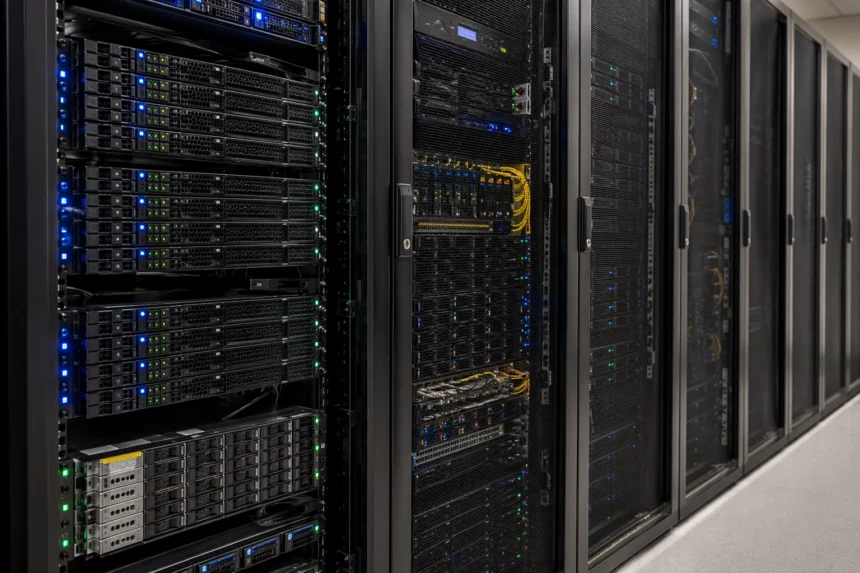
The exact number of servers worldwide cannot be determined. Unlike cars or smartphones, servers, including AI servers, are not centrally registered, and their total count is constantly changing: new capacity is being deployed, while older hardware is decommissioned.
However, according to estimates from аналитических компаний and infrastructure providers, there are hundreds of millions of servers globally. As of 2024–2025, the most realistic range is between 80 and 120 million physical servers, excluding virtual machines.
It is important to note that this refers specifically to physical devices. When virtualization, containers, and cloud instances are taken into account, the number of “logical servers” increases many times over and reaches into the billions.
Why It Is Impossible to Determine an Exact Number
The main reason is the absence of a single data source. Servers are distributed across different types of infrastructure:
- corporate data centers operated by companies
- cloud providers (AWS, Azure, Google Cloud)
- colocation facilities
- edge infrastructure
- private server rooms
Each of these segments evolves at a different pace and does not publish complete data about its infrastructure.
Additionally, virtualization further complicates the picture. A single physical server can host dozens or even hundreds of virtual machines, blurring the line between the “number of servers” and the “number of compute units.”
Where Servers Are Concentrated
Most server infrastructure is concentrated in large-scale data centers. The leading regions in terms of capacity are the United States, Europe, and China. The highest density is found in areas with развитая сетевая инфраструктура and access to energy resources.
For example:
- Northern Virginia – the largest data center cluster in the world
- Frankfurt – a key European hub (DE-CIX)
- Beijing and Shanghai – major data center hubs in Asia
At the same time, a significant portion of servers remains “invisible” to global statistics – these include internal corporate infrastructure, smaller facilities, and edge deployments.
How the Number of Servers Is Growing
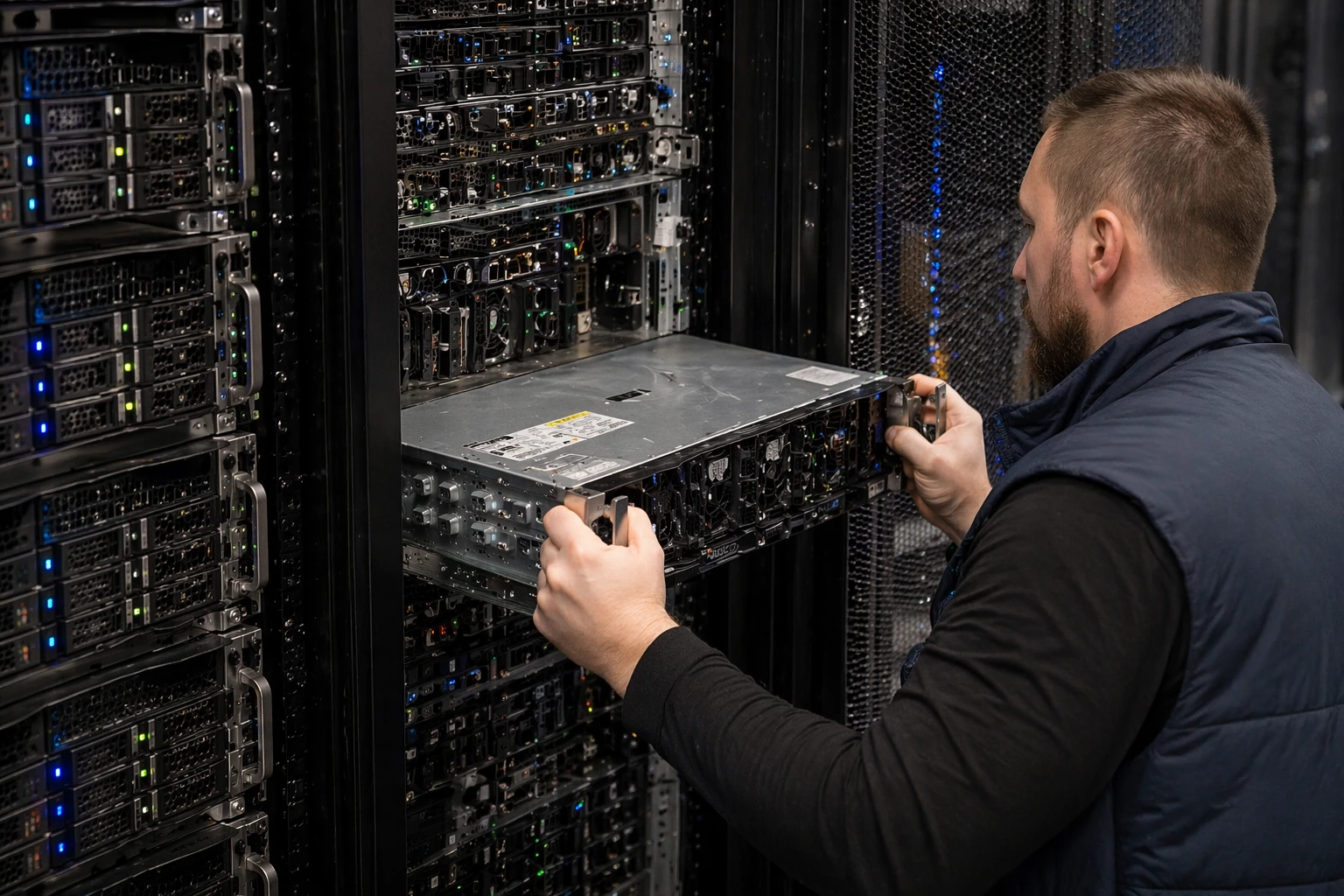
The growth of server infrastructure is directly linked to the expansion of cloud computing, digital services, and especially AI workloads. While web services and corporate systems were the main drivers in the past, data processing and machine learning now play the key role.
Over the past 10 years, the market has changed dramatically. Major cloud providers have begun building hyperscale data centers, each capable of housing tens or even hundreds of thousands of servers. Moreover, growth is not slowing down – it is accelerating.
Key growth drivers:
- cloud services and SaaS platforms
- streaming, social networks, and data storage
- AI and machine learning
- edge infrastructure (processing data closer to the user)
The impact of AI is particularly significant. Training models requires enormous computing power, and companies are rapidly expanding GPU clusters, increasing both the total number of servers and deployment density.
Impact of AI on Server Infrastructure
AI is not just increasing the number of servers – it is changing their type. While infrastructure was previously built around general-purpose CPU servers, the share of specialized systems with GPUs and accelerators is now growing rapidly.
This leads to two important changes:
- increased power consumption per unit of equipment. A single AI server can replace dozens of traditional servers in terms of computing performance
- a shift in scaling logic. Instead of deploying a large number of low-power servers, companies use fewer but significantly more powerful nodes
As a result, the total number of servers continues to grow, but their combined computing power is growing even faster.
Hyperscale Data Centers
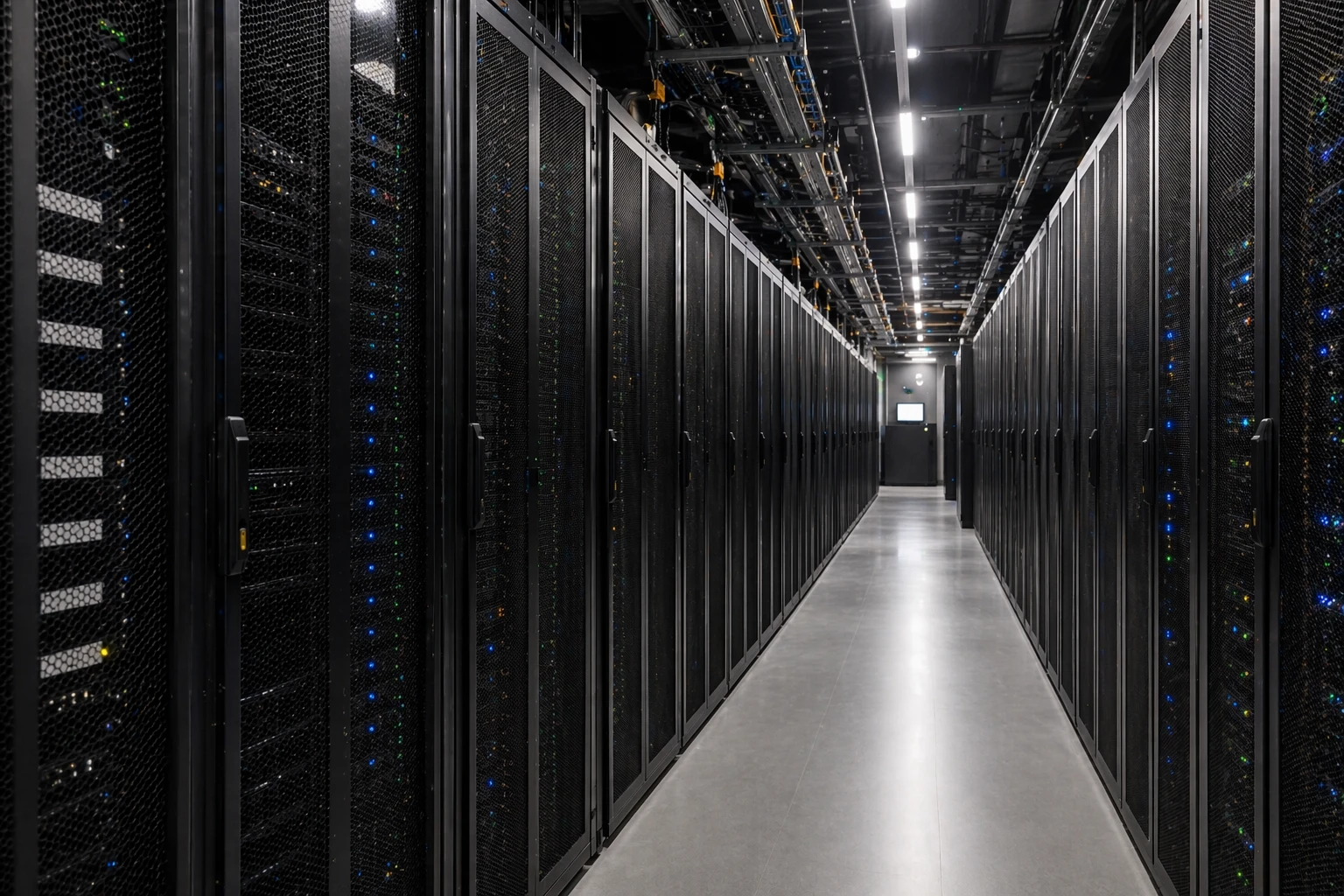
The largest market players – cloud providers – concentrate a significant portion of servers in so-called hyperscale data centers.
These facilities are characterized by:
- hundreds of thousands of servers within a single complex
- automated infrastructure management
- high deployment density
- optimization for specific workload types
For example, a single hyperscale data center can contain more servers than the entire infrastructure of a mid-sized enterprise. This leads to the concentration of computing resources in a limited number of geographic locations.
Edge and Decentralization
Alongside the growth of large data centers, an opposite trend is emerging – decentralization through edge infrastructure.
Edge servers are deployed closer to end users and are used for:
- reducing latency
- real-time data processing
- offloading central data centers
Although these servers are typically less powerful, their number is growing rapidly, especially in IoT, telecommunications, and autonomous systems.
How Many Servers Will There Be in the Future
Current estimates of 80–120 million physical servers are quickly becoming outdated. The market continues to grow, and in the coming years this number will increase due to both cloud expansion and AI infrastructure development.
The key trend is not just growth in quantity, but growth in computing density and specialization. A modern server can perform tasks that previously required dozens of machines. However, this does not reduce overall demand – on the contrary, workloads are growing faster than hardware performance.
It is expected that:
- AI infrastructure will become the main growth driver
- hyperscale data centers will continue to expand
- edge infrastructure will add millions of new nodes
- the total number of servers will grow alongside data volumes
At the same time, the market structure will change: the share of specialized servers (GPUs, AI accelerators) will grow faster than traditional CPU-based systems.
Why Capacity Matters More Than Quantity
The question “how many servers are there in the world” is important, but it does not reflect the full picture. What matters more is how their role is evolving.
Today, infrastructure is developing in two directions:
On one hand – the concentration of computing power in large-scale data centers. On the other – the distribution of workloads through edge nodes.
At the same time, the key factor is no longer the number of servers, but their ability to process data, train models, and support digital services.